Tuesday, 30 June 2015

Fun Maths Assessment

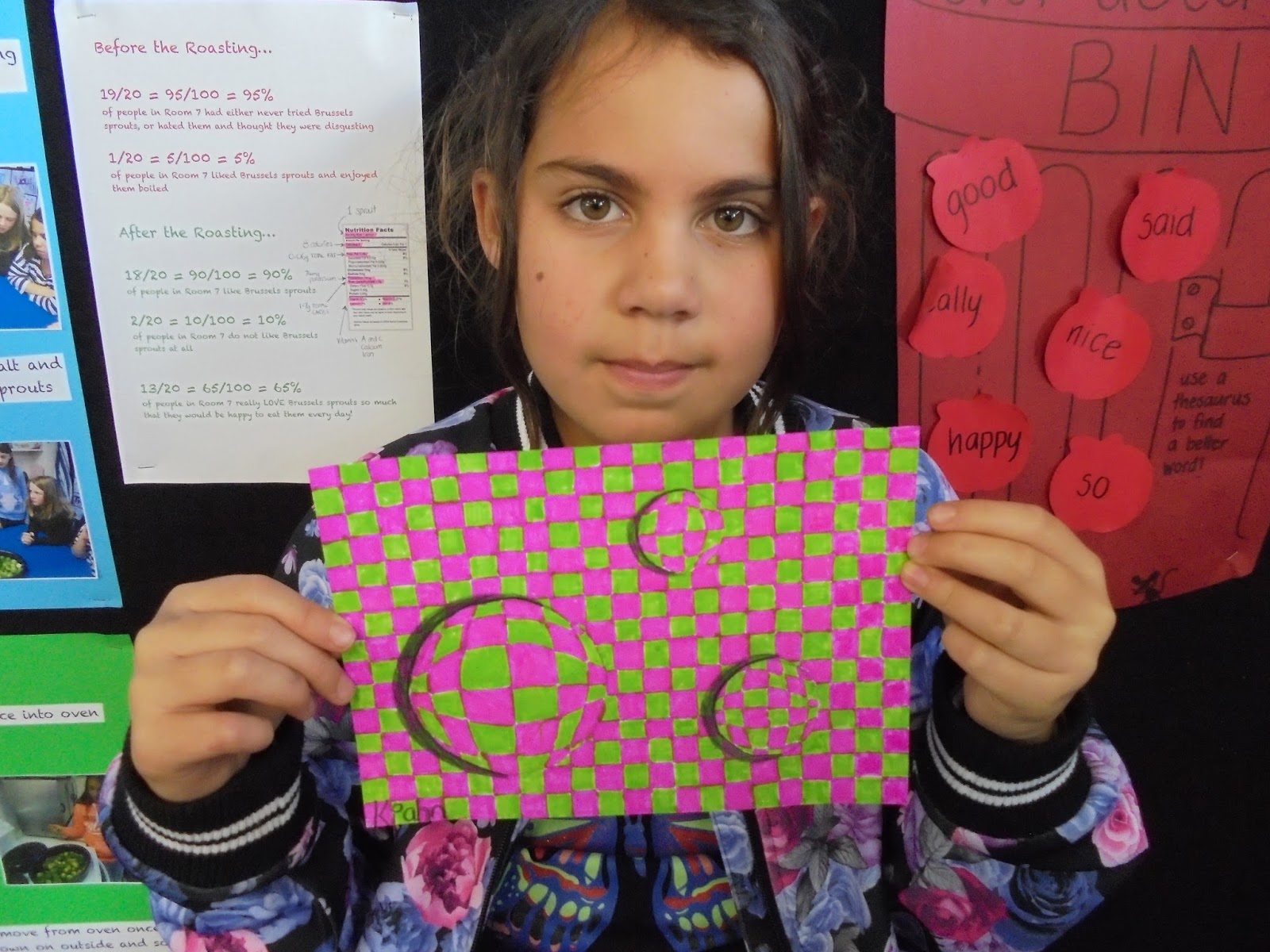
I created this assessment sheet last year to see how well the children could remember what 'radius' and 'diameter' meant, after doing some work with circles. I also wanted to see them use exact measurements with a ruler, in both centimetres and millimetres, and apply the Habits of Mind Persisting & Striving for Accuracy. They all enjoyed using the compasses too, and for many of them it was the first time they had tried, so I am pretty impressed with the results.
The task was devised after I saw another really awesome idea on pinterest.


The assessment sheet / instructions. I probably should add in a bit for them to fill in about what they did well, and what they would change next time, and a space for my comment too.


Tuesday, 16 June 2015

Scrapbooks and Gloss Testing

After meeting with Dianne (quite some time ago sorry!) and discussing where to next, I decided that it would be ok to really challenge the children. I had originally thought I was asking too much of them by putting more than one problem to solve within each problem solving question, but Dianne said this was ok. So then I got all carried away and created a whole story about a chicken farmer with his eggs and this lasted all week because every day there would be a question relating to the solution from the previous day. This week it's a story about a party.

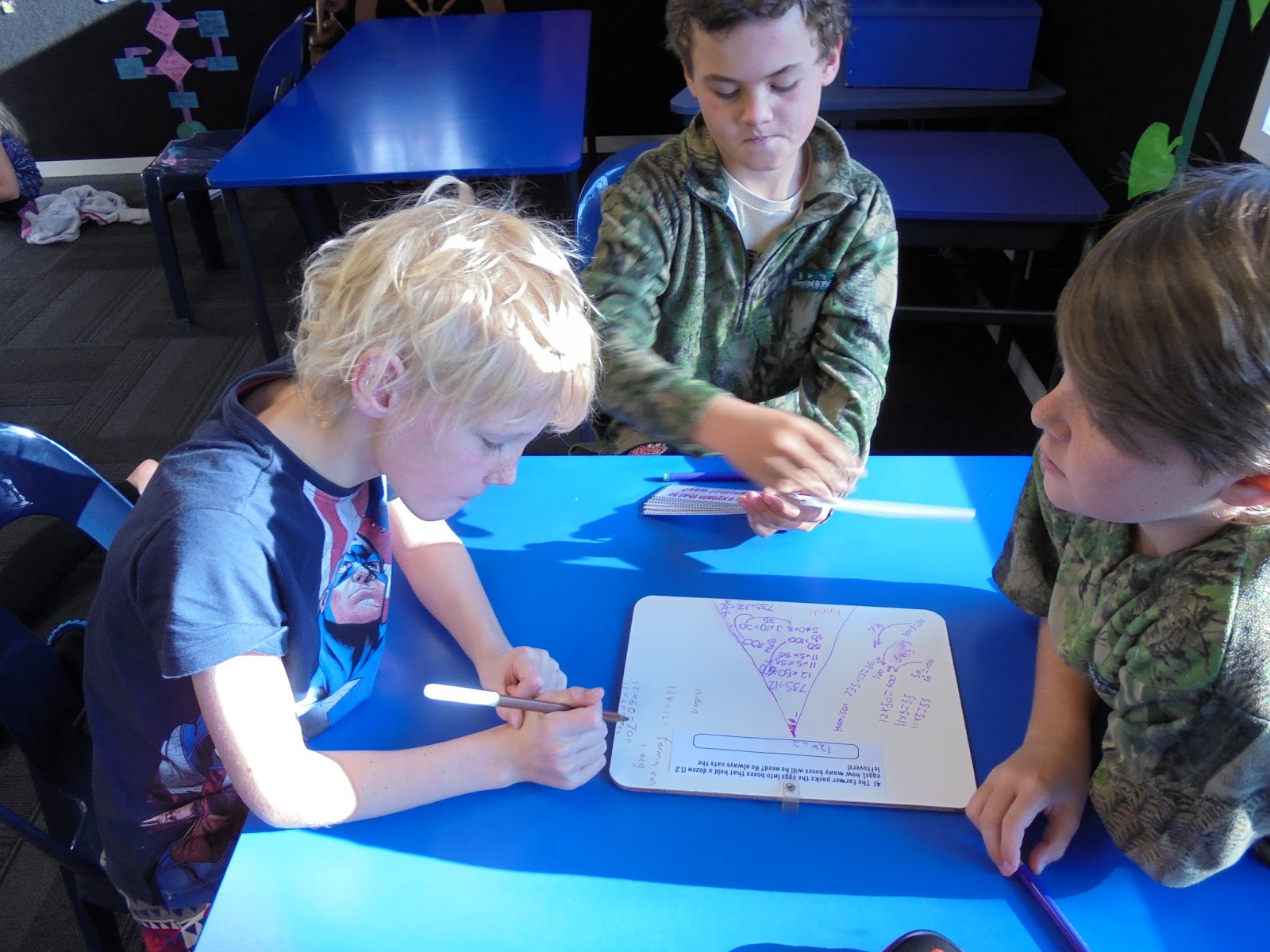
Some serious problem solving happening!
 The scrapbooks are working brilliantly, I can see at a glance who is doing what, and this made mid- year report writing so easy!
A few things I noticed...
  • the gloss testing provided interesting results for some, compared to what they do in class
  • the children are getting better at explaining their strategies
  • some keep reverting back to additive strategies, or earlier, when they are faced with trickier problems
  • 5 minutes silent time for problem solving at the beginning of each task is working well, it discourages the whole group from using the same strategy (this was an issue when we first began)
  • revoicing and repeating (talk moves) only seem to work when the children are really focused. Even though I use the ice block sticks, sometimes they just aren't listening! (But I do that too sometimes, just switch off for a bit, so I can't be too annoyed about it!)

    See! I can see the whole week, check out each child's strategies and progress, and make my own notes too! It is good!

Monday, 15 June 2015

Muesli Bars!

This is just a quick post. My class had a big discussion about muesli bars some time ago, after a scary amount of muesli bar wrappers kept ruining our chances of winning the trophy in our Zero Waste school. To solve the problem they decided we should make our own, (which we have not yet done) and then we got to talking about health and nutrition and cost. This resulted in a collection of empty muesli bar boxes arriving at school on a daily basis, with which nutritional information was compared, and so I just had to make the most of it all and do statistics (even though statistics was not planned for this term!) At the end of it all, we now know
  • the difference between histograms and bar graphs
  • how to use "pages" on the computer, to produce a professional looking graph
  • pie graphs weren't the right graph to display our findings
  • what and x and y axis are
  • graphs need titles and labels
  • pictographs look nice but aren't so easy to read when you have lots of data
  • that you need to be accurate
  • Pam's Fruit and Nut bars were the best value for money, and the healthiest!
    Yes, Griffin's 100's & 1000's Muesli Bars was voted "Most Attractive Packaging" by Room 7!

Sunday, 24 May 2015

The Superness of Pinterest


I am just quickly posting this while my class are busy creating graphs and charts for statistics. Two ideas I have used from Pinterest that work really well...
1) Bazinga - a game I found that another teacher created, it is an awesome game that can be used for any curriculum area but I am using it with my numeracy group and it is fun! I had to make it up myself, and even went as far as laminating the cards for it so that it will last. I really like it and the class love playing. It is a group game so involves everyone in the group, and I can use any questions I like. I don't watch telly so I didn't know Bazinga is taken from some telly show until someone pointed it out, but oh well!

2) Bottle of Dice - the other idea that I found on Pinterest, and love, is to put dice in a little bottle of water! I have been searching for the little bottles that I saw earlier in the year at The Warehouse. When I returned to get some they had none left, but last week one of my students said they had seen them there again. So I bought 2. It was the absolutely most revolting sugar free, zero calorie, fruit flavoured water drink ever, my husband managed to get his down, I tipped mine out, all for the sake of having a cute little bottle to put dice in. But they are adorable, and it stops the noisy, land on the floor and roll under furniture problem with enthusiastic dice rolling. Also, I can find the dice quickly, they don't get lost and put in the incorrect boxes, and I can change the amount of dice in the bottle to suit the game we are playing. The dice faces look magnified through the water too. Now I just need to get another few bottles. I wonder if the kids would drink the water?


The Solution!

I know this doesn't really seem like a super relevant thing but I feel pleased that my idea worked so I am sharing it and then moving on, and next time I shall actually talk a bit about the children and their maths! I decided to use the little whiteboards (of which I seem to have about a million floating around the room) and groups were asked to record their problem solving on the whiteboards with felt tip pens (yes, just plain old felts - whiteboard markers are expensive and they always get ruined). Groups put the question at the top of the board. They spend about 5 minutes working through the problem in silence, then share how they are going and what strategies they are using. We are using the "talk moves" in groups too. Then we get together as a class and share strategies and discuss. And then... I take photos of the whiteboards, print them out 4 to a page, cut them out and glue them into each group's scrapbook. And it works because there is room for me to comment, room for them to write ideas for next time, and I can see exactly who is doing what.
And that is how I solved the A3 paper problem!

And for those of you who wondered about the felt tip pen ... hand sanitizer takes it off beautifully, a lesson learned when grandson decorated the walls with pen. Hand sanitizer seems to work for many things - ballpoint, felt, even vivid on some surfaces :)

Monday, 11 May 2015

After Some Professional Development

It was really awesome having Dianne come in and take a maths lesson with my class. I got to see how it all works and gained lots of ideas, and answers to the questions I had in my head.
I saw interesting things happening within my groups, unexpected things like children reverting back to using repeated addition while trying to solve an equation that was obviously multiplication, and they had already done one just like it!
I liked that it really doesn't take as long as I initially thought, and it is definitely a do-able thing for each session. But I am still trying to figure out a way to keep record of their thinking and ideas for each problem. I hate the wasted paper, and using an A3 sheet for each group, and maybe 2 sheets per group per session, that's 7 groups times 2 is 14 a day and then 3 times a week is ...
OK, 14 +14 +14
or 3 x 10 + 3 x 4 hahaha, goodness knows how they would work it out, maybe 3 + 3 + 3 + 3....!
I don't want to have a big folder for each group with loads of paper, and I don't want a scrapbook either, but I think that might be the way to go. I do think that I could figure out a way to save paper while still being able to keep record of each child's thinking and when I do I will be happy!

Monday, 30 March 2015

Talk Moves

I haven't put on any more games, sorry! But I am just quickly updating this because I tried the talk moves today. And I have them displayed so that I can see them, and remember to use them.
We have done some open ended problem solving just to get used to our groups, and so today I tried out a very similar problem to the one we did as a staff. It was very interesting. Even though we had practised the strategy I thought they would use (adding to each side of the subtraction problem to make tidy numbers) not one child remembered it, or used it. And we had a variety of answers, many of which were wrong. The children really enjoyed using the question cards Pam gave me to prompt questioning, and there was some fabulous discussion happening in my class.
In the end, I reminded a child about the strategy (he was using an algorithm to solve the problem as that's what his mum uses, and he admitted that he would have used tidy numbers as a first option but wanted to try a different way) and he happily explained this strategy to the class. Then we tried the ice block stick name thing and that worked well too. I will just put on a few photos as I am distracted by staff meeting! And I will put some more games on soon too!
The Question was 73 - 38...


Standard algorithms produced the correct answer, and the other child separated tens and ones, and got a different answer.

This group enjoyed the discussion, but all came up with the wrong answers!

Even the beans didn't help these two, although it did help me to see where they are going wrong, and what they are thinking.

73 beans...

Jack explains, I even revoiced, and then used the sticks to choose a child to repeat!
And now I have missed an important piece of info at staff meeting and I have to share and I haven't been listening!